



 Written by Jared Vagy - PT, DPT
Finger injuries are the most injured body region in rock climbing, and one simple way to reduce risk is to make sure your fingers are warmed up before climbing.
A consistent finger warm-up helps prepare the tissues in the fingers for loading. It also builds the habit of controlled, progressive loading before hard climbing.
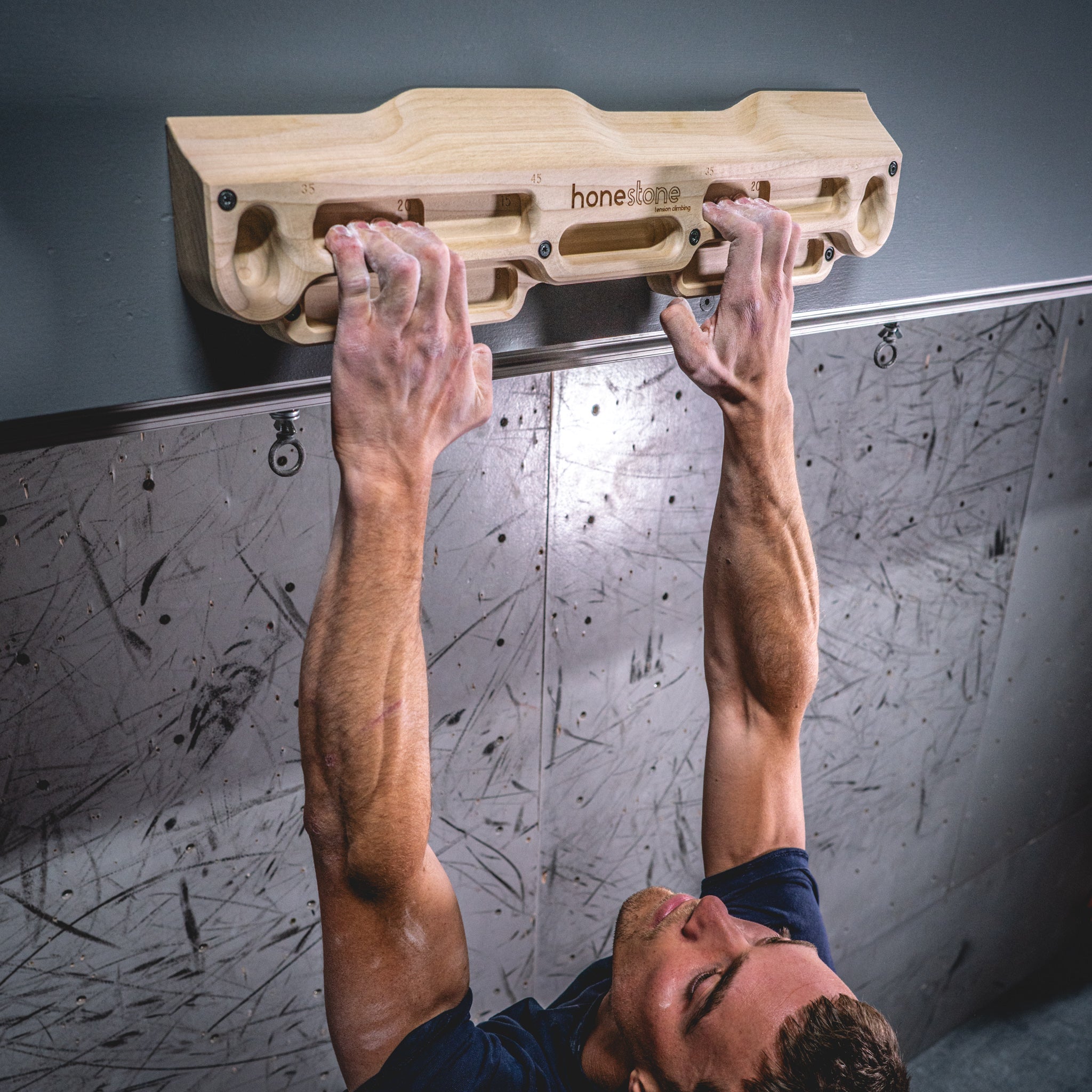
Climbers warm up in many ways. Some use a fingerboard for a progressive warm-up. Others get on the wall and gradually move from easier routes or boulder problems to more challenging ones. Both can work well, but climbers sometimes miss one important part of the warm-up: preparing the fingers through circulation, range of motion, tendon gliding, and progressive load through varied ranges of motion.
The most common finger injury in rock climbing is a pulley injury, which often occurs when the fingers fatigue and begin to open under load. Climbers may also experience finger joint capsulitis or synovitis, where the joint becomes irritated, stiff, and limited in range of motion. Lumbrical strains can occur as well, particularly during pocket climbing, when the fingers are loaded unevenly or placed in positions they are not prepared to tolerate.
This is why warming up only with isometric gripping, where the fingers hold a fixed position without moving through a full range of motion, may not be enough. Fingerboards and on-the-wall warm-ups can help prepare the fingers for load, but they do not always move the fingers through their full available range of motion. The fingers need more than the ability to tolerate the stress of crimping. They also need blood flow, circulation, joint mobility, and tendon gliding before they are asked to pull hard.
The two exercises below are from The Resilient Climber, by Jared Vagy. They are simple, require minimal equipment, just a portable fingerboard such as a Flash Board and resistance bands. They are useful range of motion based additions to a fingerboard or on-the-wall warm-up.
The Exercises
Tendon Glides
This warm-up exercise moves the fingers through five progressive positions in a rhythmic sequence, promoting full tendon gliding and joint mobility before climbing. Perform the following hand positions in sequence for 3 sets of 45 seconds, moving smoothly from one to the next:
- Straight fingers: begin with fingers fully extended
- Tabletop: fold fingers at the knuckles while keeping the middle and end joints straight
- Straight fist: fold fingers into the palm with fingertips flat against the hand
- Hook fist: curl only the middle and distal joints into a claw shape, keeping the knuckles straight
- Full fist: pull fingers in tightly toward the knuckles into a complete fist
Loaded Tendon Glides
Attach a resistance band to a portable fingerboard, broomstick, or PVC pipe, then thread it under your feet to anchor it in place. Stand upright with feet shoulder-width apart. Curl your fingers against the resistance of the band, then open your hand again without letting go. Repeat this rolling motion of curling and opening, staying engaged and maintaining control throughout.
This warm-up exercise adds resistance to the tendon glide. In a biomechanics study, Andreas Schweizer found that it takes roughly 100 climbing moves, about 50 on each hand, to adequately warm up the finger pulleys. This exercise simulates gripping through a full range of motion, so perform five sets of 10 reps on each hand to work toward fully warming up the fingers.
Build More Resilient Fingers for Climbing
Want to better prepare your fingers before climbing? These tendon glide exercises are a small part of the crimp grip section in The Resilient Climber, by Jared Vagy. The full book and video resources go deeper into finger preparation, crimping, and 40 essential climbing movements with targeted exercises for mobility, strength, control, and resilience.
- The Resilient Climber Book gives you the full framework for understanding the strength, mobility, and movement capacity behind key climbing techniques.
- The Resilient Climber Videos provide a guided exercise library with detailed demonstrations, coaching cues, and common mistakes to avoid.