

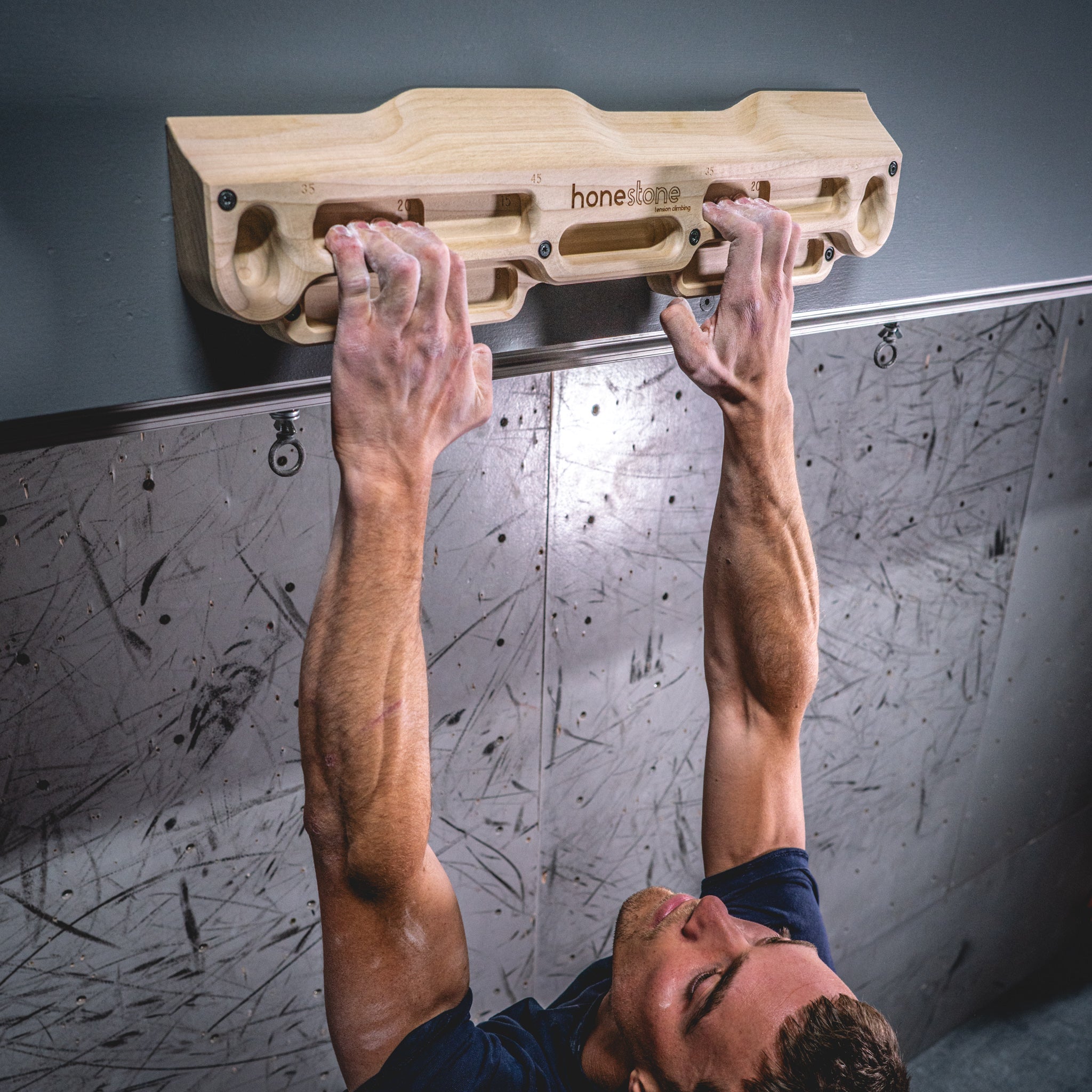


An Interview with Liv Ogier
Written by Michael Rosato. Photos by Christopher Cosser.
In the Spring of 2026, Boulder-based climber Liv Ogier achieved a historic milestone at the Fortress of Solitude in Colorado, securing the first ascent (FA) of Yellow Sun. By doing an extension to Tommy Caldwell’s iconic Kryptonite—the first 9a (5.14d) in the United States—Ogier didn't just complete a massive line; she became only the second woman in US history to establish a route of that grade, permanently etching her name into the upper echelons of American climbing history.
This is the story of projecting through a Colorado winter as a full-time working professional, trying your hardest no matter the outcome, and how a trip to Spain completely changed her perspective.

Part I: The Wall and the Mythos
For someone who doesn’t know the area, describe the location and presentation of Yellow Sun.
"Yellow Sun is located at the Fortress of Solitude, a crag about 30 minutes from Rifle, Colorado, and about three and a half hours from where I live in Boulder. It’s an insane, beautiful cliff, but there are rarely people there, because it requires an, hour-long hike straight uphill. Most people prefer Rifle because there’s zero approach.
The first time you go up to the Fortress, you can't see the wall at all during the hike. It feels brutal because you don’t know what you’re sweating for. I was seriously questioning my choices. But then—and it sounds cheesy—you spin the corner, the entire wall reveals itself, and you just think, 'I get it now.' It looks like Europe. It has these massive blue limestone streaks; it doesn’t look like it belongs in Colorado or the US at all."
When did you first hear about the route, and what made you want to try it?
"I actually knew about Kryptonite first. That’s the line Tommy Caldwell opened in 1999—the first 9a in the US. Over the years, four or five different climbers told me it was one of the best routes they’ve ever been on. It was always in the back of my mind.
Then, a week before I planned to check out Kryptonite for the first time, I ran into Nicholas Milburn at a party. He was the one who bolted the extension that I eventually did. He didn't tell me too much about it; he just said, 'Kryptonite is amazing, have fun, and there's this extension up there—you’re welcome to try it if you want.'"
Where does the name Yellow Sun come from?
"It’s a superhero reference. The first pitch is called Kryptonite, which is Superman’s ultimate weakness. I’m not a massive superhero person, but since the entire wall has that theme, I felt I had to stick to it. The yellow sun is where Superman gets his strength and powers. It felt like a fitting name for the extension."

Part II: The Breakdown of a 50-Meter Monster
Can you break down the sections of the route? What felt most difficult from the onset?
"Kryptonite itself is pure endurance climbing. Every move is a consistent level of difficulty; there isn't a true standout crux, it’s just relentlessly hard. For me, the crux was learning how to kneebar properly. The kneebars on Kryptonite are incredibly technical and insecure because the feet are terrible. You can't just plug a knee in and relax; you have to stay fully engaged."
"The extension is completely different. Once you reach the chains of Kryptonite, you get a couple of pretty good holds, but you're still on a steep overhang trying to shake out. You have to recover something, because the crux of Yellow Sun hits you right off those chains. It’s a tricky boulder problem using bad hands—a terrible sloper, a stacked mono, and a really wide pinch. If you get through that boulder, you still have 10 more meters of endurance climbing on better holds, but with big moves and jumps to reach the top. It’s a 50-meter monster route. You're fighting forearm pump the entire way."
How overhung is it?
"From the ground, it’s deceivingly steep. It doesn't look too bad from below, but once you’re up on the wall, you instantly realize how steep it actually is."

Part III: The "Winter Crag" Delusion
What do you remember most vividly about your first day on the route?
"The hike killed me. I think I drank all of my water before I even reached the crag. Standing under it, I thought, 'Wow, this route requires so much commitment.' I hadn't climbed a route of that grade before, and I genuinely didn't know if I could climb my hardest at a crag that required so much. I laugh about that now, because I had no idea how much effort it was actually going to take."
How did your relationship with the project evolve over the winter?
"I started in November when the fall weather was still warm. But once winter hit, the Fortress became incredibly inconsistent. If it was cloudy, the wall turned into an absolute freezer. The wind would whip through, you'd lose all feeling in your fingers, and you'd turn into an icicle. It was pretty depressing.
But if the sun was out, the wall is south-facing so it gets full exposure, and would instantly heat up to what felt like 90°F. There was no in-between. In the dead of winter, you basically pray for a perfect 30-minute window at 4:00 p.m. where the sun has set and it's just warm enough to climb."
That sounds miserable. Why keep punishing yourself through the winter instead of waiting?
"All the locals and the guidebook said the Fortress is a winter crag! They warn you that in the spring, the wall seeps and gets wet, and I assumed that in the summer, the heat is unbearable. I thoguht winter was the only option and I just had to make it work.
It became a brutal routine. I work a full-time job, so I’m a weekend warrior. Nearly every single weekend from November through February, I’d face the ski traffic on I-70. A three-and-a-half-hour drive frequently turned into five or six hours of driving in icy, snowy conditions. We’d hike through a foot of snow, get to the crag with wet socks and frozen pants, and try to climb in 20°F weather. At one point I had a routine of trying the route, falling because I couldn't feel my hands, getting right back on once the blood came back to my fingers, and taking it to the top. When you know you can do something but aren't, it makes you question why you're even trying in the first place. Those goes really tested my mental resilience. In the end I would look around, see the beauty of the route and the area, and remind myself that doing something new takes hard work."

Part IV: The Spanish Reset
You took a trip to Spain in March. How did stepping away from the project affect your mindset?
"I had planned that trip before I ever touched Kryptonite. When March arrived, it sounds dumb now, but I actually didn't want to go. I thought, 'I’m getting so close. If I take a step back now, I’m going to lose fitness on the route, and when I get back, It’ll be spring and the wall will be wet.' I left for Europe thinking the season was over.
What I didn’t realize until I stepped away was how physically and mentally fatigued I was. Driving from Boulder, camping in the back of my freezing cold Explorer, and doing that grueling hike multiple times every weekend was taking a big toll on me.
Because of my trip and some subsequent work commitments, I ended up taking nearly two months off the route. When I finally returned, I didn't hold any expectations. I assumed I’d lost progress, but I had accepted it. That neutrality stripped away all the intense pressure I’d been putting on myself all winter."
And how were the conditions when you got back?
"That’s the funny part—what I didn’t realize is that the sun angle changes in the spring. By May, the wall goes into complete shade by 10:00 a.m. Even though the air temperature is 30 degrees warmer, the wall stays cool. Because the late winter was so dry, there was minimal seeping. It was the exact conditions I’d spent all winter daydreaming about. The stars just aligned."

Part V: The Send
Can you describe the moment it finally came together?
"It actually happened right after one of my worst attempts. On my first weekend back, I just reacquainted myself with the moves. The following weekend, I tied in, got super nervous, and had a foot pop super low on the route- well below the actual climbing meat.
I lowered down, but because I had already 'blown' the go, the pressure evaporated. I immediately tied back in, pulled right back on, and thought, 'Okay, this is it. I'm doing it.’
“All winter long, it was just me against this route, so when I finally sent it, it felt like taking a deep breath of fresh air for the first time in a long time. Being the second American woman to FA 9a feels surreal. It wasn’t my goal when I first went to the Fortress, so I’m incredibly honored and humbled to add a small piece of history to such an iconic route."
What do you think people miss if they only see the final send video?
"The sheer volume of labor. I did a rough calculation based on the number of times I hiked up to the Fortress: in total vertical meters gained and lost, I hiked from sea level to the summit of Mount Everest and back down. Also, the reality of balancing a full-time career with an elite-level project. Almost all of my peers who project routes of this caliber climb full-time. Balancing full-time work with maximum athletic commitment every single weekend is a separate puzzle entirely."
So you’re downgrading Kryptonite- Tell us more about that.
“I am, yes, but only after discussing it with others who have tried or done the route recently. Tommy opened Kryptonite at 9a. A couple of hands and feet broke some years ago, and the beta has changed slightly on one section of the route. I believe Kryptonite sits at the very top of 8c+, but after speaking with others and based on my own experience, I just don’t think it’s quite 9a still with the modern beta. With the addition of the boulder and the enduro climbing after, it seems fair that ‘Yellow Sun’ is therefore 9a."

Part VI: Looking Forward
Now that you've completed this massive project, what's next? Has it changed your perspective on climbing?
"It completely changed my motivations. Before Yellow Sun, I obviously had tons of respect for route development, but I didn’t see myself wanting to dedicate so much time to finding and bolting lines. But establishing a first ascent is unique. You get to offer a brand-new line to the climbing community for others to experience. I owe a lot to Nicholas Millburn for bolting the extension. Going forward, I want to spend time developing and bolting.
As for the immediate future, I want to build up my base in Wyoming at Wolf Point this summer, and maybe check out some Southern Utah gems in the fall. Then, I’m planning to head back up to the Fortress. I want to try some established lines like Flex Luther, but there is still a massive amount of unbolted rock up there, and I’d love to explore it. One of my biggest goals is to spend time developing and bolting new routes."